Ambergris
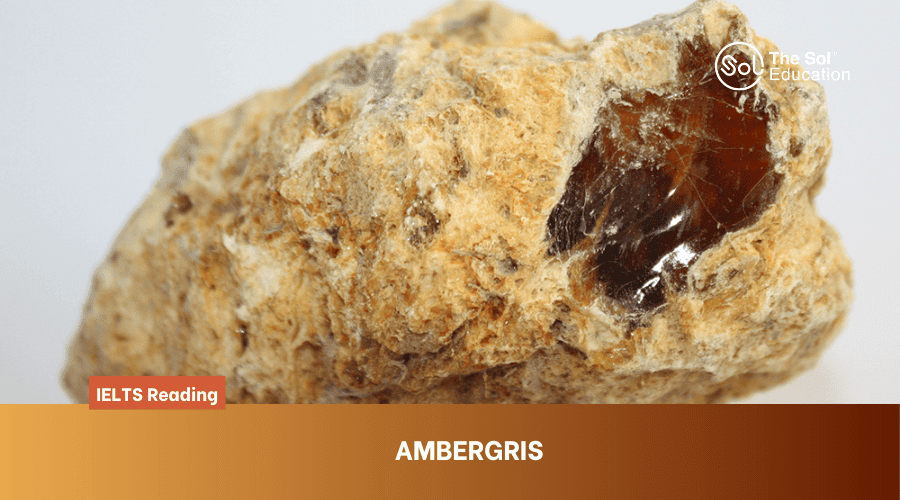
What is it and where does it come from?
Ambergris was used to perfume cosmetics in the days of ancient Mesopotamia and almost every civilization on the earth has a brush with Ambergris. Before 1,000 AD, the Chinese names ambergris as lung sien hiang, "dragon's spittle perfume," as they think that it was produced from the drooling of dragons sleeping on rocks at the edge of a sea. The Arabs knew ambergris as an bar who believed that it is produced from springs near seas. It also gets its name from here. For centuries, this substance has also been used as a flavouring for food.
During the Middle Ages, Europeans used ambergris as a remedy for headaches, colds, epilepsy, and other ailments. In the 1851 whaling novel Moby-Dick, Herman Melville claimed that ambergris was "largely used in perfumery." But nobody ever knew where it really came from. Experts were still guessing its origin thousands of years later, until the long ages of guesswork ended in the 1720's, when Nantucket whalers found gobs of the costly material inside the stomachs of sperm whales. Industrial whaling quickly burgeoned. By 20th century ambergris is mainly recovered from inside the carcasses of sperm whales.
Through countless ages, people have found pieces of ambergris on sandy beaches. It was named grey amber to distinguish it from golden amber, another rare treasure. Both of them were among the most sought-after substances in the world, almost as valuable as gold. (Ambergris sells for roughly $20 a gram, slightly less than gold at $30 a gram.) Amber floats in salt water, and in old times the origin of both these substances was mysterious. But it turned out that amber and ambergris have little in common. Amber is a fossilized resin from trees that was quite familiar to Europeans long before the discovery of the New World, and prized for jewelry. Although considered a gem, amber is a hard, transparent, wholly-organic material derived from the resin of extinct species of trees, mainly pines.
To the earliest Western chroniclers, ambergris was variously thought to come from the same bituminous sea founts as amber, from the sperm of fishes or whales, from the droppings of strange sea birds (probably because of confusion over the included beaks of squid) or from the large hives of bees living near the sea. Marco Polo was the first Western chronicler who correctly attributed ambergris to sperm whales and its vomit.
As sperm whales navigate in the oceans, they often dive down to 2 km or more below the sea level to prey on squid, most famously the Giant Squid. It's commonly accepted that ambergris forms in the whale's gut or intestines as the creature attempts to "deal" with squid beaks. Sperm whales are rather partial to squid, but seemingly struggle to digest the hard, sharp, parrot-like beaks. It is thought their stomach juices become hyper-active trying to process the irritants, and eventually hard, resinous lumps are formed around the beaks, and then expelled from their innards by vomiting. When a whale initially vomits up ambergris, it is soft and has a terrible smell. Some marine biologists compare it to the unpleasant smell of cow dung. But after floating on the salty ocean for about a decade, the substance hardens with air and sun into a smooth, waxy, usually rounded piece of nostril heaven. The dung smell is gone, replaced by a sweet, smooth, musky and pleasant earthy aroma.
Since ambergris is derived from animals, naturally a question of ethics arises, and in the case of ambergris, it is very important to consider. Sperm whales are an endangered species, whose populations started to decline as far back as the 19th century due to the high demand for their highly emollient oil, and today their stocks still have not recovered. During the 1970's, the Save the Whales movement brought the plight of whales to international recognition. Many people now believe that whales are "saved". This couldn't be further from the truth. All around the world, whaling still exists. Many countries continue to hunt whales, in spite of international treaties to protect them. Many marine researchers are concerned that even the trade in naturally found ambergris can be harmful by creating further incentives to hunt whales for this valuable substance.
One of the forms ambergris is used today is as a valuable fixative in perfumes to enhance and prolong the scent. But nowadays, since ambergris is rare and expensive, and big fragrance suppliers that make most of the fragrances on the market today do not deal in it for reasons of cost, availability and murky legal issues, most perfumeries prefer to add a chemical derivative which mimics the properties of ambergris. As a fragrance consumer, you can assume that there is no natural ambergris in your perfume bottle, unless the company advertises this fact and unless you own vintage fragrances created before the 1980s. If you are wondering if you have been wearing a perfume with this legendary ingredient, you may want to review your scent collection. Here are a few of some of the top ambergris containing perfumes: Givenchy Amarige, Chanel No. 5, and Gucci Guilty.
Classify the following information as referring to
A ambergris only
B amber only
C both ambergris and amber
D neither ambergris nor amber
Write the correct letter, A, B, C, or D in boxes 1-6 on your answer sheet.
1 being expensive
2 adds flavor to food
3 used as currency
4 being see-through
5 referred to by Herman Melville
6 produces sweet smell
Complete the sentences below with NO MORE THAN ONE WORD from the passage. Write your answers in boxes 7-9 on your answer sheet.
7 Sperm whales can't digest the of the squids.
8 Sperm whales drive the irritants out of their intestines by .
9 The vomit of sperm whale gradually on contact of air before having pleasant smell.
Do the following statements agree with the information given in Reading Passage 1? In boxes 10-13 on your answer sheet, write
TRUE if the statement agrees with the information
FALSE if the statement contradicts the information
NOT GIVEN if there is no information on this
10 Most ambergris comes from the dead whales today.
11 Ambergris is becoming more expensive than before.
12 Ambergris is still a popular ingredient in perfume production today.
13 New uses of ambergris have been discovered recently.
1 C
2 A
3 D
4 B
5 A
6 A
7 beaks
75
8 vomiting
9 hardens
10 True
11 Not Given
12 False
13 Not Given
Long diên hương được sử dụng để làm nước hoa cho mỹ phẩm vào thời Mesopotamia cổ đại và hầu hết mọi nền văn minh trên trái đất đều có một bàn chải với long diên hương. Trước năm 1.000 sau Công nguyên, người Trung Quốc gọi long diên hương là lung sien hiang, “nước dãi của rồng”, vì họ cho rằng nó được tạo ra từ nước dãi của những con rồng ngủ trên đá ở rìa biển. Người Ả Rập biết long diên hương là anbar, tin rằng nó được tạo ra từ những con suối gần biển. Nó cũng có tên từ đây. Trong nhiều thế kỷ, chất này cũng được dùng làm hương liệu cho thực phẩm.
Trong suốt thời Trung cổ, người châu Âu đã sử dụng long diên hương như một phương thuốc chữa đau đầu, cảm lạnh, động kinh và các bệnh khác. Trong cuốn tiểu thuyết về cá voi MobyDick năm 1851, Herman Melville tuyên bố rằng long diên hương “được sử dụng chủ yếu trong nước hoa.” Nhưng không ai từng biết nó thực sự đến từ đâu. Hàng ngàn năm sau, các chuyên gia vẫn đoán nguồn gốc của nó, cho đến khi thời gian dài phỏng đoán kết thúc vào những năm 1720, khi những người săn cá voi ở Nantucket tìm thấy những mẩu vật liệu đắt tiền bên trong dạ dày của cá nhà táng. Đánh bắt cá voi công nghiệp nhanh chóng phát triển. Đến thế kỷ 20, long diên hương chủ yếu được thu hồi từ bên trong xác cá nhà táng.
Qua vô số thời đại, người ta đã tìm thấy những mảnh long diên hương trên những bãi biển đầy cát. Nó được đặt tên là hổ phách xám để phân biệt với hổ phách vàng, một báu vật quý hiếm khác. Cả hai đều nằm trong số những chất được tìm kiếm nhiều nhất trên thế giới, gần như có giá trị như vàng. (Long diên hương được bán với giá khoảng 20 đô la một gam, thấp hơn một chút so với vàng ở mức 30 đô la một gam.)
Hổ phách nổi trong nước muối, và vào thời xa xưa, nguồn gốc của cả hai chất này đều bí ẩn. Nhưng hóa ra hổ phách và long diên hương có rất ít điểm chung. Hổ phách là một loại nhựa hóa thạch từ cây khá quen thuộc với người châu Âu từ rất lâu trước khi khám phá ra Thế giới mới và được đánh giá cao như đồ trang sức. Mặc dù được coi là đá quý, hổ phách là một vật liệu cứng, trong suốt, hoàn toàn hữu cơ có nguồn gốc từ nhựa của các loài cây đã tuyệt chủng, chủ yếu là cây thông.
Đối với các nhà biên niên sử phương Tây sớm, long diên hương được cho là có nguồn gốc từ các nguồn biển chứa bitum giống như hổ phách, từ tinh trùng của cá hoặc cá voi, từ phân của các loài chim biển lạ (có thể do nhầm lẫn về mỏ mực bao gồm) hoặc từ những tổ ong lớn sống gần biển. Marco Polo là nhà biên niên sử phương Tây đầu tiên quy chính xác long diên hương cho cá nhà táng và chất nôn của nó.
Khi cá nhà táng di chuyển trong đại dương, chúng thường lặn xuống độ sâu 2 km hoặc hơn dưới mực nước biển để săn mực, nổi tiếng nhất là Mực khổng lồ. Người ta thường chấp nhận rằng long diên hương hình thành trong ruột hoặc ruột của cá voi khi sinh vật này cố gắng “đối phó” với mỏ mực. Cá nhà táng khá thích ăn mực, nhưng dường như phải vật lộn để tiêu hóa những chiếc mỏ cứng, sắc nhọn giống như loài vẹt. Người ta cho rằng dịch dạ dày của chúng trở nên hoạt động quá mức khi cố gắng xử lý các chất kích thích, và cuối cùng là những cục cứng, dẻo được hình thành xung quanh mỏ, sau đó bị tống ra khỏi bộ phận bên trong của chúng bằng cách nôn mửa.
Khi một con cá voi ban đầu nôn ra long diên hương, nó mềm và có mùi kinh khủng. Một số nhà sinh học biển so sánh nó với mùi khó chịu của phân bò. Nhưng sau khi lênh đênh trên đại dương mặn trong khoảng một thập kỷ, chất này cứng lại với không khí và ánh nắng mặt trời thành một mảnh tròn, mịn như sáp và thường có lỗ. Mùi phân không còn nữa, thay vào đó là mùi đất ngọt ngào, êm dịu, xạ hương và dễ chịu.
Vì long diên hương có nguồn gốc từ động vật nên đương nhiên nảy sinh một câu hỏi về đạo đức, và trong trường hợp của long diên hương, điều rất quan trọng là phải xem xét. Cá nhà táng là một loài có nguy cơ tuyệt chủng, quần thể của chúng bắt đầu giảm từ thế kỷ 19 do nhu cầu cao đối với loại dầu làm mềm cao của chúng và ngày nay trữ lượng của chúng vẫn chưa phục hồi. Trong những năm 1970, phong trào Cứu cá voi đã đưa cảnh ngộ của cá voi được quốc tế công nhận. Hiện nay nhiều người tin rằng cá voi đã được “cứu sống”. Điều này không thể xa hơn sự thật. Trên khắp thế giới, săn bắt cá voi vẫn tồn tại. Nhiều quốc gia tiếp tục săn bắt cá voi, bất chấp các hiệp ước quốc tế để bảo vệ chúng. Nhiều nhà nghiên cứu biển lo ngại rằng ngay cả việc buôn bán long diên hương được tìm thấy tự nhiên cũng có thể gây hại bằng cách tạo thêm động cơ săn cá voi để lấy chất quý giá này.
Một trong những dạng long diên hương được sử dụng ngày nay như một chất định hình có giá trị trong nước hoa để tăng cường và kéo dài mùi hương. Nhưng ngày nay, vì long diên hương rất hiếm và đắt tiền, và các nhà cung cấp nước hoa lớn sản xuất hầu hết các loại nước hoa trên thị trường hiện nay không kinh doanh long diên hương vì lý do chi phí, sự sẵn có và các vấn đề pháp lý mờ ám, hầu hết các nhà sản xuất nước hoa thích thêm một dẫn xuất hóa học bắt chước. tính chất của long diên hương. Là người tiêu dùng nước hoa, bạn có thể cho rằng không có long diên hương tự nhiên trong chai nước hoa của mình, trừ khi công ty quảng cáo sự thật này và trừ khi bạn sở hữu nước hoa cổ điển được tạo ra trước những năm 1980. Nếu bạn đang tự hỏi liệu mình đã từng dùng loại nước hoa có thành phần huyền thoại này hay chưa, bạn có thể muốn xem lại bộ sưu tập mùi hương của mình. Dưới đây là một số nước hoa có chứa long diên hương hàng đầu: Givenchy Amarige, Chanel No. 5 và Gucci Guilty.